
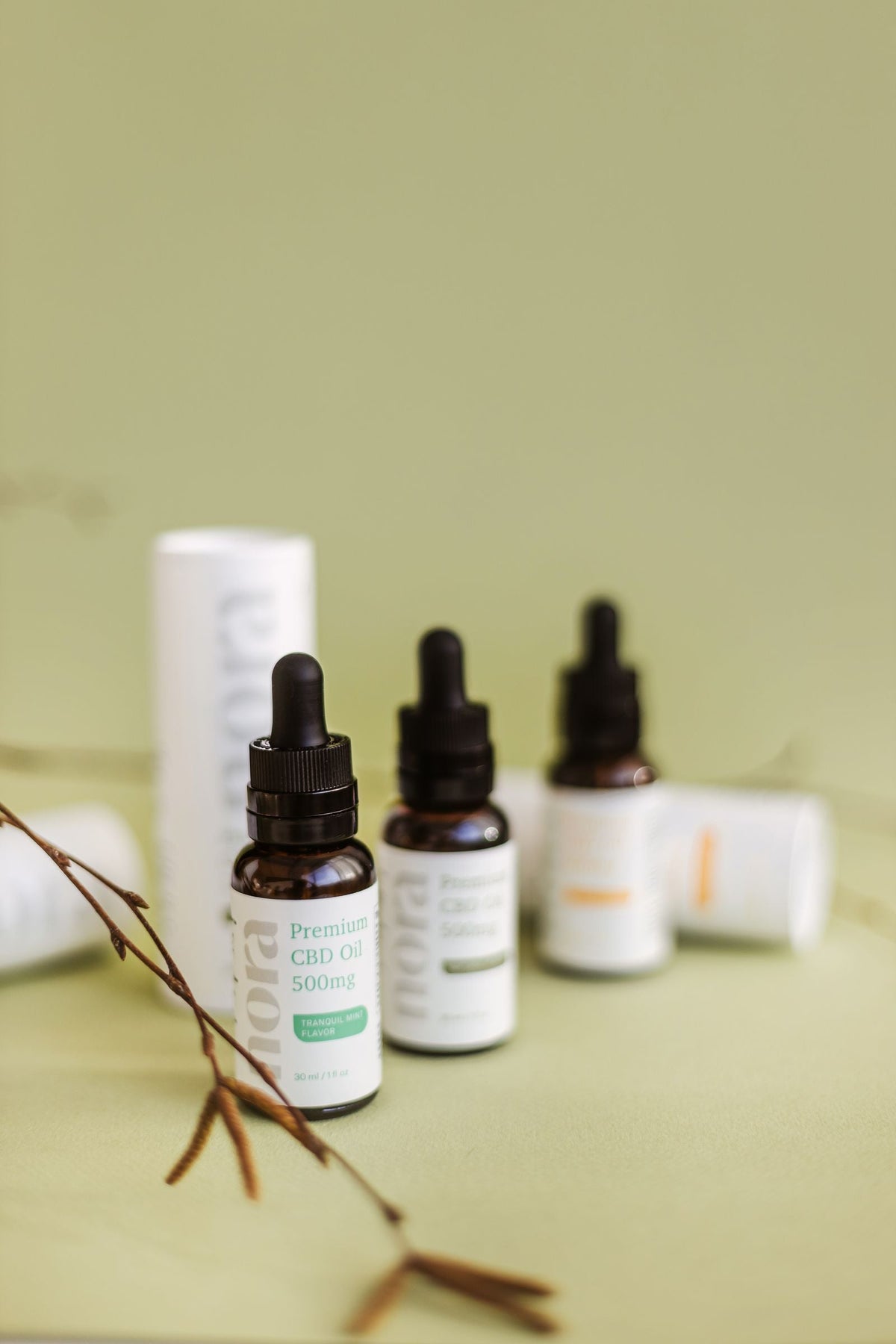
When comparing CBD oils, it is normal to find bottles priced close to €25 alongside others that cost €70, €90, or more than €100. At first glance, the difference may seem excessive, but the price of the bottle does not tell the whole story.
Volume, concentration, total milligrams of CBD, the type of extract, and the tests carried out can vary greatly. The brand, manufacturing process, carrier oil, additional ingredients, and packaging size also play a role.
The main idea is simple: a more expensive oil is not automatically better, and a cheaper one is not necessarily worse. To make a real comparison, you need to check what each euro spent actually gets you.
1. Percentage is not enough: you need to look at the volume
A percentage of 20% indicates concentration, but it does not show how much CBD is in the entire bottle. A 20% oil in a 10 ml bottle and another 20% oil in a 30 ml bottle have the same concentration, but the latter contains approximately three times as much CBD in total.
When the manufacturer uses the standard commercial equivalence, you can use this rough calculation:
percentage × volume in ml × 10 = approximate milligrams of CBD
For example:
- 5% in 10 ml: approximately 500 mg.
- 20% in 10 ml: approximately 2,000 mg.
- 30% in 30 ml: approximately 9,000 mg.
The label and the manufacturer's certificate should take precedence, as the way the percentage is expressed and the density of the formula can affect the exact conversion.
2. Compare the cost per 1,000 mg
The current CBD Market catalog shows why the final price can be misleading. These are examples from August 2026; prices may change:
| Product | Format | Approximate CBD | Bottle price | Approximate cost per 1,000 mg |
|---|---|---|---|---|
| Bee Products Full Spectrum 5% | 10 ml | 500 mg | €30.00 | €60.00 |
| GG+ Premium 20% | 10 ml | 2,000 mg | €69.90 | €34.95 |
| Plant of Life Full Spectrum 30% | 30 ml | 9,000 mg | €114.40 | €12.71 |
The €114.40 bottle has the highest total price, but it is also three times larger than a 10 ml bottle and claims a high concentration. According to this rough comparison, its cost per 1,000 mg is lower than that of the other two.
This does not determine which product is right for you or measure its overall quality. It simply shows that the price per bottle and the price per amount of CBD are different metrics.
3. Full spectrum, broad spectrum, and isolate are not the same formula
The name of the extract can also affect the cost:
- Full spectrum: aims to maintain a broad profile of cannabinoids, terpenes, and other hemp components. It may contain traces of THC within the limits applicable to the product.
- Broad spectrum: retains various components but undergoes refining to remove THC down to the stated level.
- CBD isolate: uses purified cannabidiol and has a simpler composition.
None of these categories is a guarantee of quality in itself. A properly formulated and tested isolate can have excellent traceability, while a “full spectrum” label does not prove by itself which cannabinoids are in the batch.
Oils that combine CBD with stated amounts of CBG, CBN, terpenes, or botanical extracts should also not be compared solely on their CBD percentage. They are different formulations, and these ingredients can affect the cost.
4. Testing and contaminant control cost money
A manufacturer may choose to test only the CBD concentration or carry out more comprehensive testing that includes:
- CBD, CBDA, THC, THCA, and minor cannabinoids.
- Heavy metals.
- Pesticide residues.
- Residual solvents.
- Microbiology or mycotoxins, where applicable.
Conducting batch testing and working with accredited laboratories costs money. This expense may be reflected in the price, but it should be verifiable with an up-to-date certificate that matches the batch on the packaging.
A study published in 2024 analyzed 202 commercial CBD products in the United States and found frequent discrepancies between the labeling and the measured content, as well as contaminants in some of the samples. These results do not automatically describe the Spanish market or the products in this store, but they show why traceable testing provides information that packaging design cannot replace.
You can learn more about this in our guide on how to read a laboratory analysis of a CBD product.
5. Raw materials, extraction, and refining
The price may also reflect differences in:
- The origin and selection of the hemp.
- Cultivation and harvesting controls.
- The extraction method.
- The removal of waxes, chlorophyll, or solvents.
- The reduction or removal of THC.
- Standardization between batches.
CO₂ extraction usually requires specialized equipment; ethanol extraction requires the proper removal and control of the solvent. No single method guarantees a superior product. What matters is the entire process, the analytical results, and batch consistency.
6. Carrier oil and additional ingredients
The extract is mixed with a base that may be coconut MCT, hemp seed oil, olive oil, or another carrier oil. Some formulations include terpenes, chamomile, turmeric, or other stated ingredients.
These components affect the aroma, texture, stability, and cost. Even so, terms such as “premium,” “natural,” or “organic” are only useful when accompanied by specific, verifiable information.
7. Packaging, stability, brand, and distribution
A dark glass bottle, a reliable seal, controlled-atmosphere packaging, or stability studies can increase the cost. Design, marketing, importation, intermediaries, and brand positioning also play a role.
This explains why two technically similar products may have different prices, but not every commercial cost translates into greater quality. A brand’s reputation should be supported by data on composition and traceability.
Pre-comparison checklist
Before concluding that an oil is expensive or cheap, you should check:
- The total volume of the bottle.
- The percentage and total milligrams of CBD.
- The cost per 1,000 mg, if the labels are comparable.
- Full spectrum, broad spectrum, or isolate.
- The presence of CBG, CBN, terpenes, or other ingredients.
- The carrier oil.
- The certificate corresponding to the batch.
- The scope of the contaminant testing.
- Origin, manufacturer, and traceability.
- The stated use and product warnings.
So, is it worth paying more?
It may be worth it when the additional cost reflects a larger quantity, a different composition, better controls, superior traceability, or a formulation that suits your needs. It is not worth paying more simply for words like “premium” if the brand does not explain what they mean.
The best purchase is not always the cheapest or most expensive bottle: it is the one whose composition, quantity, and controls can be transparently verified and compared.
You can view formats, concentrations, and compositions in our collection of CBD oils.
Legal information: this content is for educational purposes and does not constitute medical or dietary advice. AESAN states that CBD continues to be an unauthorized novel food in Spain. The stated use for each product must be respected.